
Brain Degradation: Why the Digital Age Makes Us More Distracted, Tired, and Easy to Manipulate

In recent years, there has been an unprecedented rise in complaints related to brain function —
chronic distraction, weakened focus, poor memory, and even fatigue when reading short texts.
And this is not limited to people over 50; young and middle-aged adults are even more affected.
We are no longer talking about temporary tiredness or stress — but about a structural change in the way the brain operates.
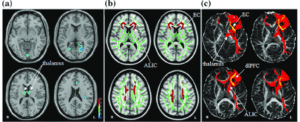
The Real Cause? Constant Digital Connection
The smartphone, created to make life easier, has quietly become a device that reprograms the brain into “fast-scroll” mode.
The problem isn’t technology itself — it’s how it’s designed to capture and hold our attention.
What Research Says
As early as 2008, studies by the Nielsen Norman Group showed that the average internet user reads only about 20% of any webpage, following the so-called F-pattern — the first lines carefully, the middle skimmed, the end skipped.
“Scanning is the new normal.” — Jakob Nielsen, Web Usability Expert
Over time, this changes neural pathways. The brain stops searching for depth and starts craving keywords, triggers, and brief stimuli.
The result is what psychologists now call “brain rot” — information overload leading to cognitive degradation.
The Internet: The New Psycho-Stimulant
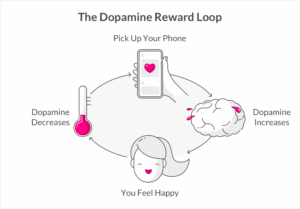
Constant scrolling activates the brain’s dopamine centers in a way strikingly similar to gambling.
Each notification, meme, and video creates a micro-reward loop that traps attention.
“When rewards become too easy, motivation disappears.” — Dr. J. Lee, Harvard Medical School
This explains why:
-
long texts seem “boring”
-
concentration drops
-
anxiety rises without internet access
-
intellectual stamina declines
Even the Educated Are Not Immune
Professors and writers admit they struggle to read complex texts after a day online.
As Nicholas Carr wrote in “The Shallows”:
“The Internet is making us shallow thinkers. This isn’t a metaphor — it’s a neural reality.”
Our brains are literally being rewired for scrolling, not understanding.
80% of Online Time? Wasted.
Over 80% of our time online is spent on:
-
short videos
-
social media
-
headlines without content
-
memes and entertainment
-
low-value information
“We’re the first generation to trade focus for instant gratification.” — Sherry Turkle, MIT
The Decline of Deep Reading
Deep reading — the ability to follow complex structure, reason, and reflect — is becoming rare.
As in Umberto Eco’s “The Name of the Rose”, only a few may retain access to deep understanding.
No Supplement Can Fix It
No vitamins, caffeine, or nootropics can heal a brain overloaded with digital junk.
The only cure is a change in lifestyle:
less digital noise, more meaningful content, more silence.
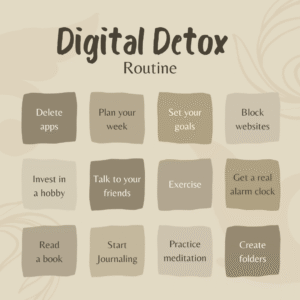
How to Restore the Brain – A Practical Program
-
Minimize Phone Use – Airplane mode is the new luxury.
-
Disconnect After Work – Protect your psyche.
-
Bring Books Back – Start with half a page a day.
-
Limit Social Media – Set boundaries and timers.
-
Filter Information – Replace scrolling with reading.
-
Take a Digital Sabbath – One day a week offline.
-

In Conclusion
If we train the brain to scroll, it becomes fast but shallow.
If we train it to think, it regains depth and clarity.
“The free mind is the one that can stay alone with itself.” — Pascal
The digital age gave us everything — but took our most precious resource: attention.
Without attention, there is no thought, no identity, no inner world.
Analysis by Petya Bankova, written with love and care for those who wish to stay truly awake.
With love and care,
Petya Bankova


Leave a Reply
Want to join the discussion?Feel free to contribute!